The Core Difference
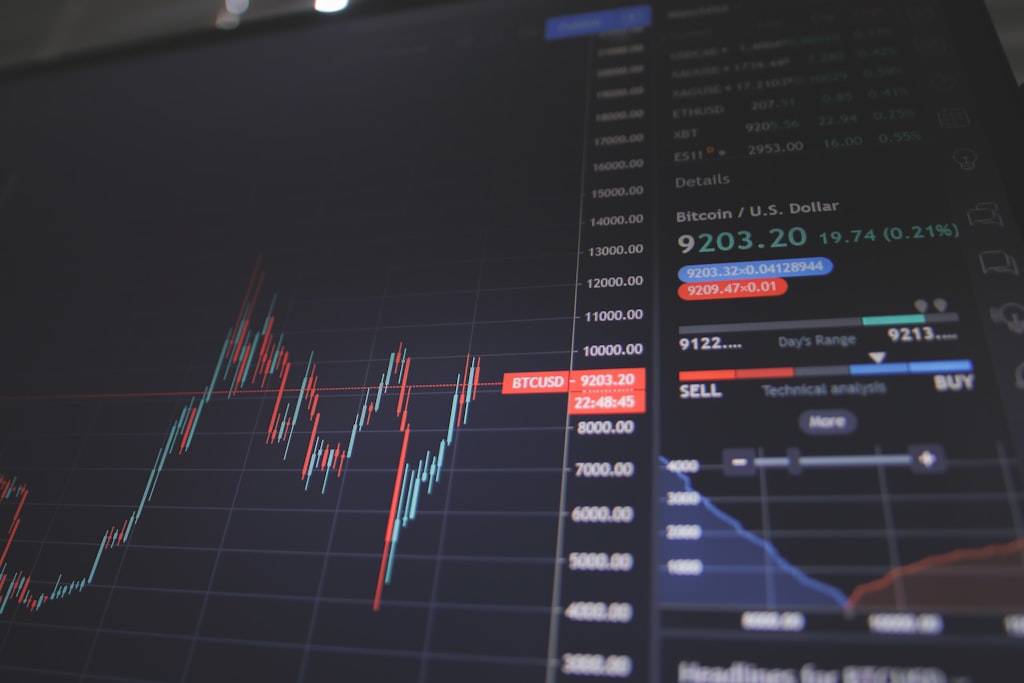
Both ETFs (Exchange-Traded Funds) and mutual funds are pooled investment vehicles that hold baskets of stocks, bonds, or other securities. The fundamental difference is how they trade: mutual funds are priced once per day at market close and all buy/sell orders execute at that day's NAV (net asset value). ETFs trade on exchanges like individual stocks throughout the day, with prices fluctuating in real-time based on supply and demand.
For most long-term investors, this trading difference is largely irrelevant — you're not day-trading your retirement savings. But it creates meaningful downstream differences in taxes, costs, minimums, and flexibility that matter for portfolio construction.
The Tax Advantage of ETFs
ETFs have a structural tax advantage over mutual funds. When investors sell shares of a mutual fund, the fund may need to sell underlying securities to raise cash, generating capital gains that are distributed to all remaining shareholders — including you, even if you didn't sell anything. You can owe taxes on gains you didn't personally realize.
ETFs avoid this through an "in-kind creation/redemption" mechanism. When large institutional investors (authorized participants) redeem ETF shares, they receive the underlying securities directly instead of cash. This process doesn't trigger capital gains within the fund, so individual shareholders rarely receive unwanted capital gains distributions. For taxable accounts, this makes ETFs meaningfully more tax-efficient.
This advantage matters most for taxable brokerage accounts. In tax-advantaged accounts (401(k), IRA, HSA), capital gains distributions don't trigger taxes, so the ETF advantage disappears.
Costs and Minimums
ETFs generally have lower expense ratios than comparable mutual funds, though the gap has narrowed significantly. The Vanguard S&P 500 ETF (VOO) charges 0.03%. The Vanguard 500 Index Fund Admiral Shares (VFIAX) also charges 0.04%. At this level, the difference is negligible — $1 per year per $10,000 invested.
Where costs diverge more: ETFs have no minimum investment (you can buy a single share, and most brokers now offer fractional shares). Mutual fund Admiral Shares at Vanguard require a $3,000 minimum. Investor Shares have a $1,000 minimum but charge higher fees. If you're starting with small amounts, ETFs offer better accessibility.
One cost to watch: trading commissions. Most major brokers (Fidelity, Schwab, Vanguard, E*TRADE) now offer commission-free ETF trading, but verify this with your specific broker before assuming.
When Mutual Funds Are Better
Mutual funds still have advantages in specific scenarios. In employer 401(k) plans, mutual funds are usually the only option — and that's fine, because the tax advantage of ETFs doesn't apply inside a 401(k). For automatic investing (setting up recurring purchases on a specific schedule), mutual funds are easier because you can buy exact dollar amounts ($200/month, for example). ETFs trade in whole shares (or fractional shares at some brokers), which can make precise dollar-amount investing slightly more complicated.
Advertisement
Some actively managed strategies are also available only as mutual funds. While the evidence strongly favors low-cost index investing for most people, if you want access to a specific active manager's strategy, you may need a mutual fund.
How to Actually Buy Each
ETFs trade like stocks: you buy them through any brokerage account during market hours at the current market price, and most major brokers now charge zero commission on them. Because they trade intraday, you can also use limit orders to control the exact price you pay. Mutual funds work differently — you buy them directly from the fund company or through your brokerage, orders execute only once per day at the closing net asset value (NAV), and some funds carry minimum initial investments of $1,000 to $3,000. For a 401(k), your choices are usually mutual funds because that is what the plan offers; in a personal brokerage or IRA, you typically have access to both.
Common Mistakes to Avoid
Do not chase last year's top-performing fund — past performance is the least reliable predictor of future returns, and yesterday's winner is often tomorrow's laggard. Watch for "load" mutual funds that charge a sales commission of up to 5.75% just to buy in; there is almost never a reason to pay one when no-load index funds exist. Finally, avoid holding the same index (say, an S&P 500 fund) in both ETF and mutual fund form and assuming you are diversified — you are not; you own the same 500 companies twice.
Let the Account Type Guide You
A useful shortcut: in a taxable brokerage account, the ETF's tax efficiency is a genuine advantage, so it is often the better default. Inside tax-sheltered accounts — a 401(k), traditional IRA, or Roth IRA — that advantage disappears because gains are not taxed year to year, so you should simply pick whichever option in the account has the lowest expense ratio, ETF or mutual fund. For most long-term investors the honest conclusion is that a low-cost, broadly diversified index fund wins regardless of wrapper; the ETF-versus-mutual-fund debate matters far less than keeping fees low and staying invested through market cycles.
One ETF-Only Detail: The Spread
Because ETFs trade on an exchange, they have a bid-ask spread — a small gap between the buying and selling price. On large, popular funds this spread is negligible, but on thinly traded niche ETFs it can quietly cost you. Two simple habits avoid the problem: stick to large, well-established funds with high daily trading volume, and place trades during regular market hours rather than in the first or last few minutes of the day, when spreads are widest. For long-term buy-and-hold investors this is a minor concern, but it is the one mechanical detail mutual funds never have to worry about.
The Practical Recommendation
For taxable brokerage accounts: use ETFs. The tax efficiency advantage is real and compounds over time. For tax-advantaged accounts (401(k), IRA, HSA): use whichever is available and cheaper. If both an ETF and mutual fund version of the same index are available at similar expense ratios, it doesn't materially matter which you choose. For automatic recurring investments: mutual funds are slightly more convenient, though this advantage is diminishing as more brokers support fractional ETF shares and automated ETF purchasing.
The most important decision isn't ETF vs. mutual fund — it's ensuring you're investing in low-cost, diversified index funds regardless of the wrapper. A Vanguard Total Stock Market mutual fund at 0.04% expense ratio will serve you vastly better than a high-cost actively managed ETF at 0.75%. Focus on the underlying strategy and costs, not the vehicle.
Bid-Ask Spreads and Premium/Discount Traps in ETF Trading
Unlike mutual funds that trade once per day at net asset value (NAV) after market close, ETFs trade throughout the day like single stocks. During periods of extreme market volatility, low-volume niche ETFs can trade at a premium or discount relative to their underlying NAV.
Always use Limit Orders when purchasing ETF shares during market hours, and avoid placing trades during the first 30 minutes (9:30–10:00 AM EST) when market makers are establishing bid-ask spreads.
Understanding Capital Gains Distribution Announcements
Active mutual fund managers frequently trade underlying equities within the fund throughout the calendar year. In November and December, funds publish estimated Capital Gains Distribution Notices.
If you purchase shares of a traditional mutual fund in late November right before its annual distribution record date, you will owe income taxes on the distributed capital gains—even though you did not participate in the underlying stock price growth earlier in the year. ETFs completely avoid this end-of-year tax trap.
Securities Lending Income: How ETFs Offset Management Fees
Many major index ETFs (like those managed by iShares, Vanguard, or Schwab) generate additional revenue by lending portfolio securities to institutional short sellers. The interest earned from securities lending is credited back to the fund, effectively offsetting management fees and causing some ETFs to outperform their underlying benchmark index.
Active ETFs vs. Passive Index ETFs: Fee and Trading Differences
Recent regulatory changes under SEC Rule 6c-11 have fueled rapid growth in Actively Managed ETFs. Unlike passive index ETFs that track market benchmarks like the S&P 500, active ETFs rely on portfolio managers to pick individual stocks.
Active ETFs carry higher expense ratios (0.40% to 0.90%) compared to passive index ETFs (0.03% to 0.08%). For long-term core portfolios, passive index ETFs consistently outperform 85%+ of active fund managers over 10-year investment horizons.
Understanding Fractional Share Investing and Automatic Reinvestment
Modern brokerage platforms allow Fractional Share Purchasing for ETFs, allowing investors to dollar-cost average precise dollar amounts (e.g. $50/week) into high-priced fund shares. Setting up Dividend Reinvestment Plans (DRIP) automatically reinvests cash dividends into additional ETF fractional shares without commission fees.
Tax-Loss Harvesting inside ETF Portfolios: Paired Asset Substitution
When executing tax-loss harvesting with ETFs, pair selection is critical to avoid wash-sale violations while preserving asset allocation. Common compliant paired substitutions include swapping Vanguard Total Stock Market ETF (VTI) for iShares Core U.S. Aggregate ETF (ITOT), or Schwab U.S. Dividend Equity ETF (SCHD) for Vanguard High Dividend Yield ETF (VYM).
Understanding Portfolio Rebalancing Costs in ETFs vs. Mutual Funds
When executing annual asset allocation rebalancing, selling shares of outperforming mutual funds in taxable accounts triggers realized capital gain distributions. ETFs allow seamless tax-efficient rebalancing by utilizing new cash contributions to purchase underweighted asset classes without liquidating appreciated positions.
Understanding Authorized Participants and ETF Liquidity
A common misconception among beginner investors is that an ETF's liquidity depends on its daily trading volume on stock exchanges. In reality, ETF liquidity is driven by the trading volume of its **underlying constituent assets**, thanks to the role of institutional market makers known as **Authorized Participants (APs)**.
If an ETF holds large-cap S&P 500 stocks (like Apple, Microsoft, and Amazon), the ETF is hyper-liquid even if the fund itself was created yesterday and trades only 5,000 shares per day. Authorized Participants can instantly create or redeem tens of thousands of ETF shares by exchanging underlying stock baskets, keeping the market price tied directly to Net Asset Value (NAV).
Step-by-Step Selection Guide: How to Evaluate an Index ETF
Before purchasing shares of any ETF, run this 5-point evaluation checklist:
- Expense Ratio: Ensure the annual management fee is under 0.10% for core broad-market funds (e.g., VTI, VOO, SCHB). Avoid funds charging over 0.35% unless they offer specialized non-traditional strategies.
- Tracking Error: Review the fund's historical performance relative to its target index. A high-quality index ETF should track its underlying index within 0.02% to 0.05% annually.
- Assets Under Management (AUM): Select ETFs with at least $100 million in AUM to ensure long-term fund viability and tight trading spreads.
- Bid-Ask Spread Percentage: Check the average spread between buying and selling prices. Tightly traded funds maintain spreads under 0.02%.
- Replication Method: Confirm the fund uses full physical replication (holding actual stocks) rather than synthetic derivatives or swap contracts.
Related Reading: Check out our in-depth Life Insurance Guide for step-by-step guidance.
Advertisement